How to Impress International Clients with a Corporate Event in NYC

How Navigating Manhattan’s Logistical Realities, Elite Venues, and Multi-Sensory Design Systems Elevates Global Hospitality and Anchors Market Authority
When global executives from London, Tokyo, Frankfurt, or São Paulo land in Manhattan, their expectations are understandably sky-high. They are not looking for a predictable, boilerplate itinerary or an uninspired hotel ballroom setup. To truly differentiate your firm on the global stage, your hospitality strategy must pivot away from standard, paint-by-numbers entertainment.
Learning how to impress international clients with a corporate event in NYC requires trading formulaic hospitality for rare architectural access, flawless logistical precision, and deep cultural curation.
The Strategy Behind Global Hospitality
For international decision-makers, a trip to New York is a major investment of time and energy. A premium gathering should never feel like a routine business dinner; it must serve as an immersive brand environment that communicates prestige and market leadership.
When you host a highly curated, private event, you are investing in uninterrupted focus and relationship equity. The unmatched quality of your venue, culinary choices, and execution acts as a physical reflection of your firm's operational maturity, signaling that your business handles its international partnerships with the exact same level of uncompromising excellence.
1. Selecting Venues with True Architectural Gravity
The foundational step to impress international clients with a corporate event in NYC rests entirely on selecting a venue with unique historical or cultural significance. Global travelers can visit sleek, modern skyscrapers in any major financial hub across the world. To captivate them, look for spaces that showcase the distinct historical fabric and architectural majesty of New York.
Securing Complete Acoustic Isolation
If your executives plan to discuss cross-border acquisitions, sensitive financial frameworks, or pending intellectual property agreements, a curtained-off section of a public restaurant is completely unacceptable.
Absolute Structural Privacy: Ensure the space features solid architectural doors and independent acoustic barriers to protect high-level business conversations.
Exclusive Access Paths: Your guests should be able to enter, deliberate, and exit without crossing busy public spaces or crowded main dining floors.
Dedicated Service Corridors: Verify that the room has its own service entry so the hospitality team can manage courses and wine pairings discretely without breaking the flow of critical conversations.
2. Navigating the Invisible Logistics of Manhattan
The fastest way to lose the trust of an international delegation is a breakdown in operational logistics. Moving a group of global partners through the unique gridlock of Manhattan requires a strategy that goes far beyond simply ordering standard rideshares.
Streamlining the Transport Matrix
A premier corporate partner pairs global clients with a top-tier, private luxury transport network. Your operational team must constantly monitor real-time traffic data, coordinate directly with local police precincts, and secure dedicated priority curbside loading permits.
If unexpected diplomatic summits, parades, or midtown gridlock shut down major avenues, your team must have pre-vetted backup routes—such as luxury water taxis or private heliport transfers—ready to bypass street congestion entirely and keep your schedule running perfectly on time.
3. Designing a Sophisticated, Culturally Mindful Culinary Experience
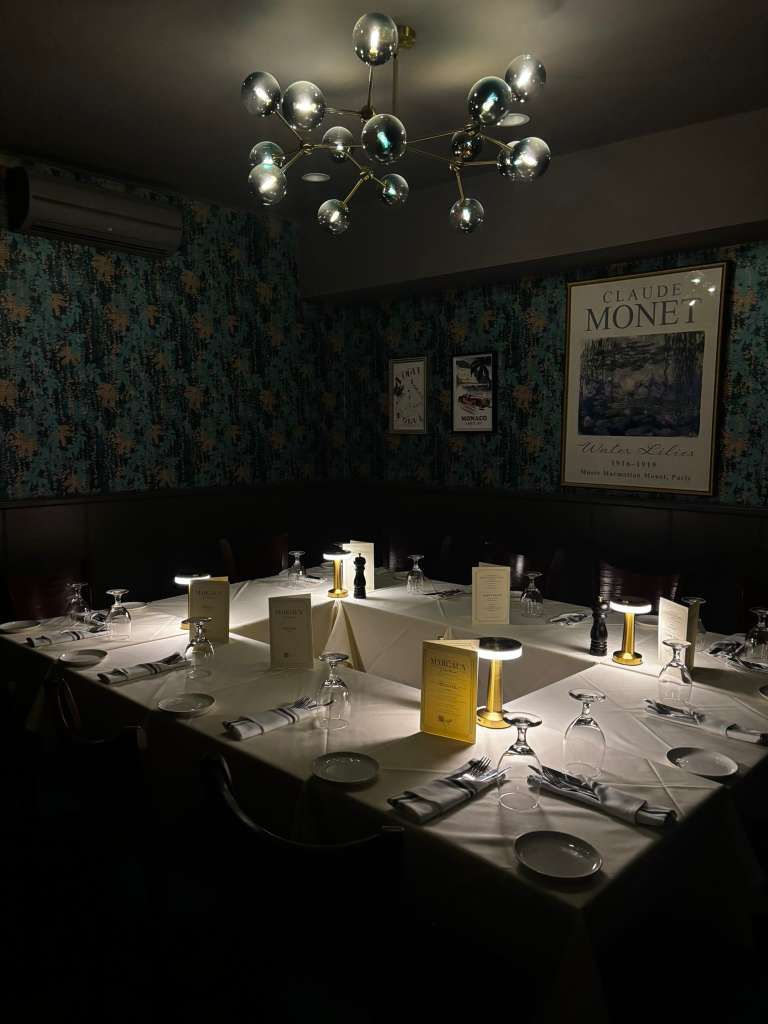
To successfully impress international clients with a corporate event in NYC, the dining program must transcend standard hotel catering. For sophisticated global travelers, food and beverage serve as a core part of the evening's narrative.
Managing Dietary Profiles with Total Discretion
In global commerce, managing cultural and dietary requirements is an essential pillar of respect and hospitality. Collect these preferences seamlessly during the initial registration phase and share them with the culinary team at least two weeks before the event.
Top-tier Michelin establishments and elite boutique caterers will use this timeline to create custom alternative dishes that perfectly match the presentation, texture, and complex flavor profiles of the main menu. This level of care ensures that every international guest feels valued and accommodated, without their preferences ever becoming a distraction to the evening.
4. Operational Excellence: The Risk Assessment Matrix
Executing a high-end international gathering requires managing a series of precise operational details behind the scenes. Your production team must audit all target properties against strict regional benchmarks:
Operational Parameter | Minimum Performance Threshold | Corporate Risk Factor |
Network Security | Isolated dual-carrier bonded cellular routers with auto-failover. | High-density data traffic and real-time international communications will instantly crash standard, shared venue Wi-Fi networks. |
Freight Lift Load Limits | 10,000 lbs minimum load capacity. | Insufficient lift capacity forces teams to break down custom scenic fabrications, doubling union labor load-in times and costs. |
Union Labor Compliance | Pre-cleared labor agreements with IATSE Local 1 and Teamsters. | Mismanaging trade jurisdictions at major loading docks results in severe financial overtime penalties and sudden work stoppages. |
Step-by-Step Execution Countdown
To transform your global strategy into a beautifully realized, stress-free evening, follow this structured operational timeline:
Phase 1: Venue Sourcing and Linguistic Review (90 Days Out)
Secure your historical asset or private penthouse, ensuring clear contracts for exclusive room usage, and establish the linguistic profile of the guest list to source top-tier translators if needed.
Phase 2: Menu Engineering and Sommelier Consulting (60 Days Out)
Conduct an extensive menu walkthrough with the culinary director to lock in courses, coordinate custom wine pairings, and confirm the exact timing for service execution.
Phase 3: Traffic Matrix and Permit Finalization (30 Days Out)
Map out all point-to-point transport paths, finalize contracts with executive sprinter networks, and secure all necessary city curbside loading permits.
Phase 4: On-Site Precision Build and Sound Check (Day of Event)
Arrive at the venue three hours before your international guests to audit table seating alignments, run high-definition network speed tests, and verify lighting and acoustic privacy boundaries.
Planning by Event&Co Art'gency
A truly successful global executive gathering on the Manhattan stage is defined by absolute logistical control, secure digital infrastructure, and deep aesthetic discipline. By pairing exclusive, restricted architectural access with a deeply personalized and respectful hospitality flow, your firm eliminates all external corporate clutter.
The ultimate result of your strategy to impress international clients with a corporate event in NYC is a secure, elevated environment that allows your leadership team to protect corporate equity, deepen cross-border trust, and confidently assert global market leadership.
A Personal Note

I’m Juline, Founder and Creative Director of Event&Co Art’gency.
My work is driven by one belief: that spaces whether event venues or storefront windows have the power to make people feel something. Through immersive design, storytelling, and intention, I create experiences that go beyond aesthetics and leave a lasting emotional impact.
You can learn more about my journey and creative vision on the About page, or get in touch to imagine your next window display or immersive project together.


Comments